

Facial volume loss is a natural biological process driven by the degradation of collagen, elastin, and the resorption of subcutaneous fat pads. As these structural components diminish, the face loses its youthful projection and support. Dermal fillers restore this lost volume by replacing the missing tissue with biocompatible materials, effectively repositioning the facial ligaments and smoothing out the resulting hollows and shadows. For additional details, review the reenvisionmedspa com.
The Four Pillars of Facial Structure
Understanding why the face changes requires looking at its architecture. The face is not a single unit but a complex assembly of four major structural components: skin, fat, muscle, and bone. As we age, volume loss in these structures contributes to many of the visible signs of aging, according to Harvard Health. When these layers thin or shrink, the skin above them loses its underlying support. This leads to a sagging appearance that cannot be fixed by surface treatments alone.
Bone resorption is a critical but often overlooked factor. The facial skeleton acts as the foundation for the soft tissues. As the bone recedes, the ligaments that anchor the skin to the bone are pulled backward. This retraction causes the skin to drape forward, creating the appearance of jowls and deep nasolabial folds. Restoring volume immediately above the bone can help reposition these ligament origins, effectively lifting the overlying soft tissue.
Fat Pad Atrophy and Migration
Subcutaneous fat pads are the primary reservoirs of facial fullness. In youth, these pads are well-defined and provide a smooth, rounded contour. With age, these fat pads undergo atrophy, meaning they shrink in size. Simultaneously, the remaining fat can migrate downward due to gravity and the weakening of the connective tissue septa that hold it in place. This migration creates hollows in the midface and cheeks while adding unwanted fullness to the lower face.
The midface is particularly susceptible to this shift. The loss of volume in the cheek area creates a shadow that deepens the nasolabial folds. This is not just a matter of wrinkles; it is a change in the three-dimensional shape of the face. At ReEnvision Aesthetics and MedSpa, practitioners focus on understanding these specific anatomical shifts to determine where volume is truly needed versus where it is merely displaced.
Collagen and Elastin Degradation
Environmental factors accelerate this process. Chronic exposure to ultraviolet radiation, known as photoaging, generates free radicals that damage collagen fibers. This damage is cumulative and irreversible without intervention. While topical retinoids can stimulate some collagen production, they cannot replace the significant volume loss that occurs in the deeper layers of the face. This is why injectable fillers are often necessary to address the structural deficits that topicals cannot reach.
How Dermal Fillers Restore Volume
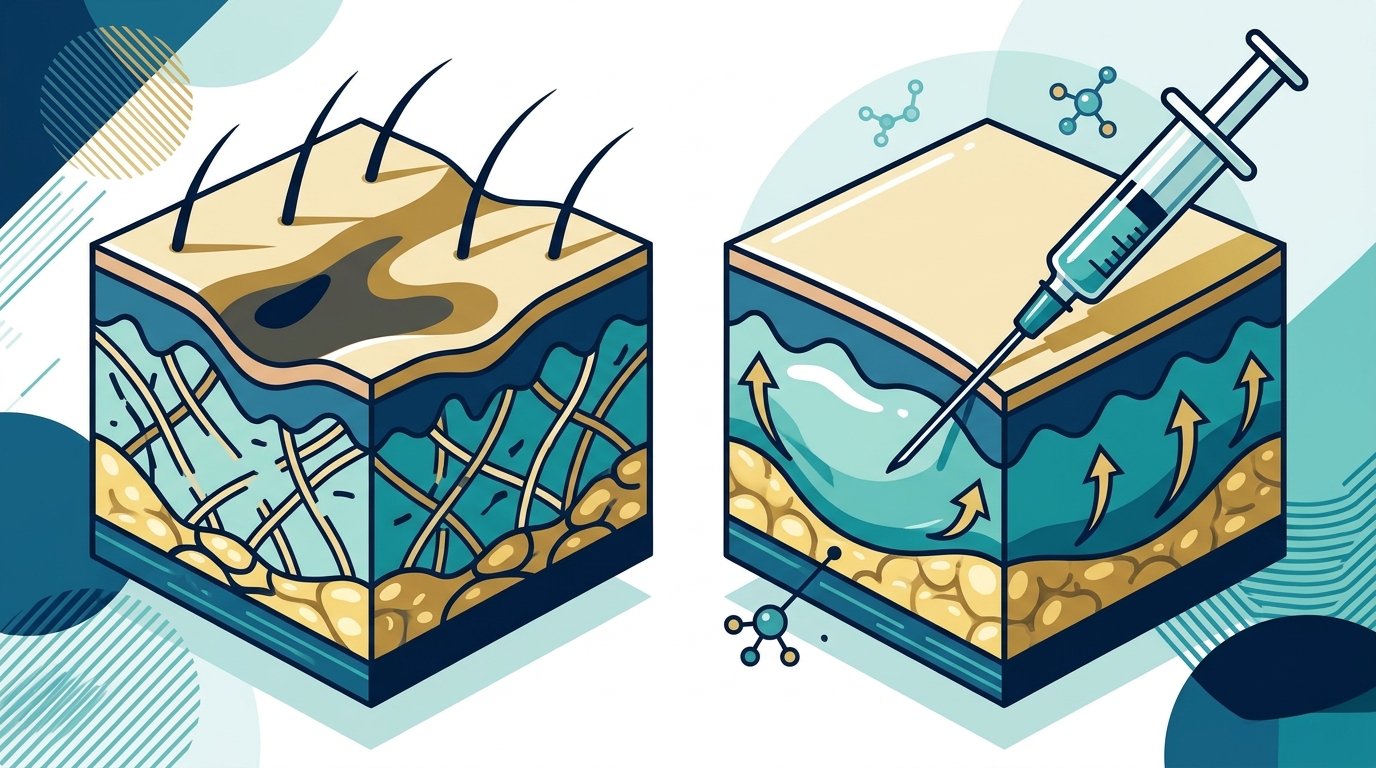
Dermal fillers are injectable devices which are used to fill wrinkles and provide volume, as defined by the FDA. The most common type of filler is hyaluronic acid (HA), a substance naturally found in the body. HA fillers work by attracting and holding water, which adds immediate volume and hydration to the treated area. This mechanism allows the filler to physically replace the lost fat or bone volume, restoring the face's natural contours.
Clinical Evidence and Safety Profile
The safety and efficacy of HA fillers are well-documented in medical literature. A study published in PubMed found that midface volumization using low volumes of hyaluronic acid filler is effective and well tolerated. At all time points, most patients would elect to undergo the procedure again, with adverse events being mild and resolving spontaneously within 14 days. This high satisfaction rate underscores the importance of using appropriate volumes and techniques.
However, the skill of the injector is paramount. The placement of fillers requires a deep understanding of facial anatomy to avoid complications such as vascular occlusion. At ReEnvision Aesthetics and MedSpa, treatments are overseen by medical professionals who prioritize safety and anatomical precision. This medical supervision ensures that the products used are FDA-approved and that any adverse reactions are managed correctly.
Key Takeaways
- Facial volume loss is caused by the atrophy of fat pads, bone resorption, and the degradation of collagen and elastin.
- The four major structural components of the face are skin, fat, muscle, and bone, all of which change with age.
- Dermal fillers, particularly hyaluronic acid, work by physically replacing lost volume and hydrating the tissue.
- Proper filler placement requires a global facial approach to restore ligament origins and lift the soft tissue.
- Clinical studies show that low-volume HA filler treatments are effective, safe, and highly satisfactory for patients.
- Medical supervision is critical to ensure the use of FDA-approved products and to prevent complications.
Frequently Asked Questions
What is the primary cause of facial volume loss?
The primary cause is the natural aging process, which leads to the atrophy of subcutaneous fat pads and the resorption of facial bone. This structural loss causes the overlying skin to sag and hollow out.
How do hyaluronic acid fillers work?
Hyaluronic acid fillers work by attracting water to the injection site, which adds immediate volume and hydration. This helps restore the face's natural contours and smooths out wrinkles.
Are dermal fillers safe?
Yes, when administered by a qualified medical professional. Clinical studies indicate that adverse events are typically mild and resolve quickly. The key to safety is proper anatomical knowledge and the use of FDA-approved products.
How long do fillers last?
The duration of results varies depending on the type of filler and the area treated. Hyaluronic acid fillers typically last between 6 to 18 months, after which they are naturally broken down by the body.
Can fillers lift the face?
Yes, by restoring volume in deep structural layers, fillers can reposition the facial ligaments. This repositioning helps lift the overlying soft tissue, creating a more youthful and supported appearance.
Who is a good candidate for volume restoration?
Individuals who notice hollowing in the cheeks, deep nasolabial folds, or a loss of jawline definition are often good candidates. A consultation with a medical professional can determine the best approach for your specific anatomy.
Restoring Your Natural Contours
Understanding the biological causes of facial volume loss is the first step toward effective treatment. By addressing the structural deficits in bone, fat, and skin, dermal fillers can restore a youthful and natural appearance. At ReEnvision Aesthetics and MedSpa, our team combines medical expertise with aesthetic artistry to provide safe and effective volume restoration. To discuss your options and develop a personalized treatment plan, today.