
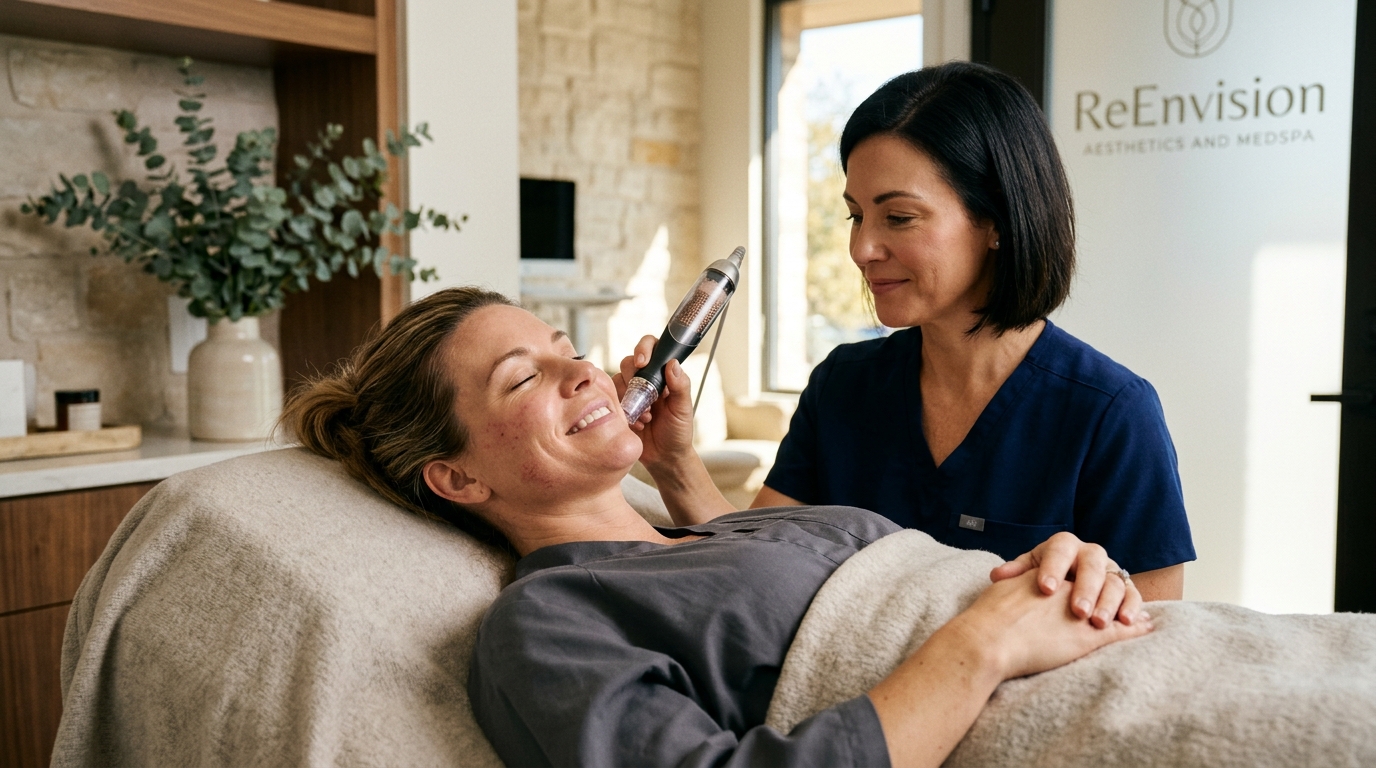
The Mechanism of Thermal Coagulation
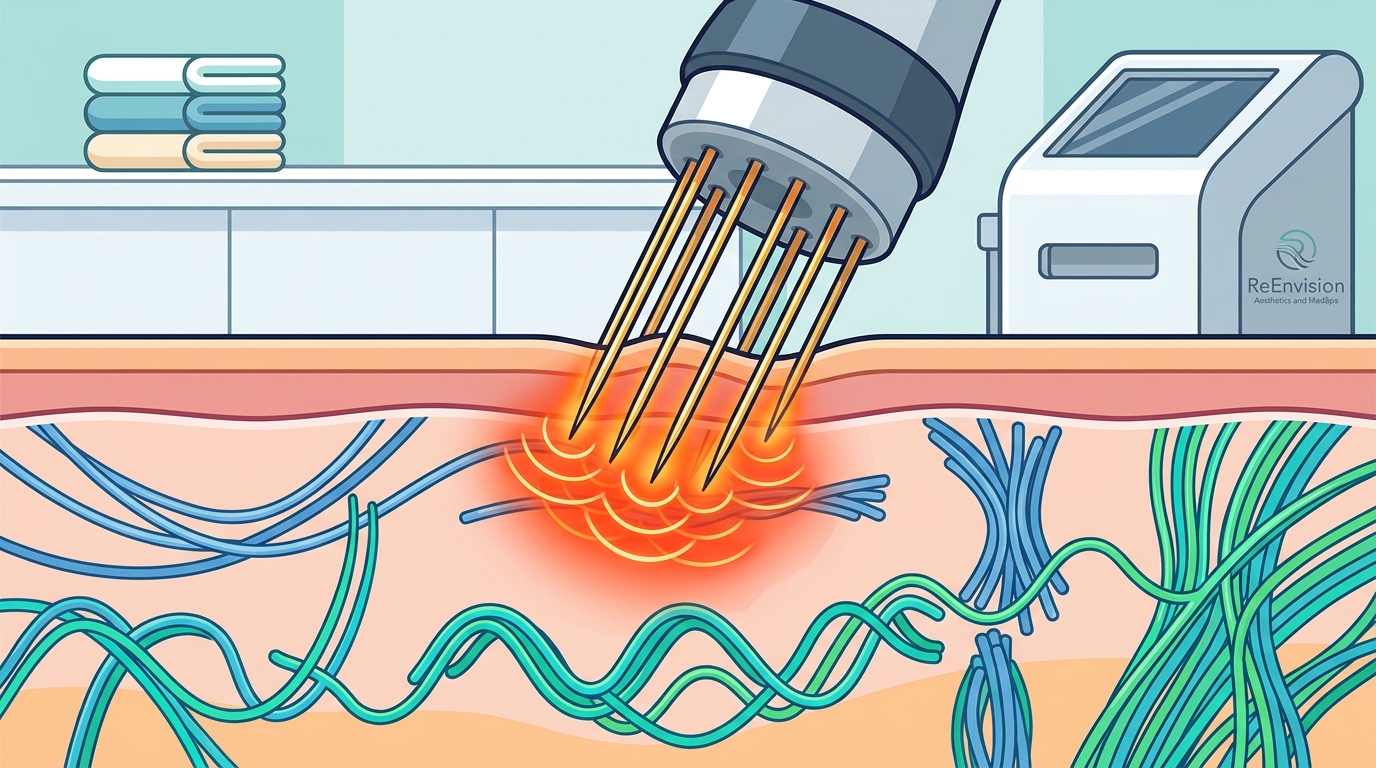
The thermal energy causes immediate collagen contraction. Existing collagen fibers shrink and tighten in response to the heat. This provides an instant lifting effect. Over the following weeks, the body initiates a remodeling phase. New collagen fibers are laid down in a denser, more organized structure. For additional details, review the .
This dual action distinguishes the treatment from traditional microneedling. Traditional microneedling relies solely on mechanical injury. Radiofrequency adds a thermal component that accelerates the remodeling process. The result is more robust tissue tightening and improved skin texture. For additional details, review the Customer Experience.
Collagen Remodeling and Fibroblast Activation
Collagen remodeling is the biological process where old, degraded collagen is replaced by new, stronger fibers. Fibroblasts are the primary cells responsible for this production. When exposed to radiofrequency energy, these cells become highly active. They increase the synthesis of procollagen, the precursor to mature collagen. For additional details, review the Frequently Asked Questions.
The depth of needle penetration is critical for this process. Deeper penetration allows energy to reach the reticular dermis. This is where the bulk of structural collagen resides. By targeting this specific layer, the treatment maximizes the stimulus for new fiber production. The new collagen is not just stronger; it is also better aligned. For additional details, review the About.
This alignment is key to skin elasticity. Randomly arranged collagen leads to sagging and laxity. Organized collagen provides structural support and bounce. The remodeling phase typically lasts three to six months. Patients often notice gradual improvements during this period. The final result is a firmer, more youthful appearance.
Targeting Loose Skin and Laxity
Skin laxity is the loss of elasticity and firmness in the skin. It is often caused by the natural breakdown of collagen and elastin over time. Radiofrequency microneedling addresses this by stimulating both collagen and elastin production. The heat energy also affects elastin fibers, causing them to contract and tighten.
At ReEnvision Aesthetics and MedSpa, practitioners assess each patient's skin condition before treatment. They determine the appropriate settings to achieve the desired tightening. This personalized approach is essential for safe and effective outcomes. The treatment is suitable for various skin types and tones.
Comparison with Other Skin Tightening Methods
Radiofrequency microneedling differs from non-invasive radiofrequency treatments. Non-invasive devices deliver heat to the surface or upper dermis. They often require multiple sessions to achieve noticeable results. Microneedling allows for deeper energy delivery. This leads to more significant structural changes in fewer sessions.
It also differs from ablative laser resurfacing. Ablative lasers remove the top layer of skin. This causes significant downtime and risk of pigmentation changes. Radiofrequency microneedling is non-ablative. It preserves the epidermis, reducing the risk of scarring and discoloration. The downtime is typically minimal, with redness lasting a few days.
The following table summarizes the key differences between these methods:
| Method | Depth of Action | Downtime | Primary Mechanism |
|---|---|---|---|
| Radiofrequency Microneedling | Deep Dermis | Minimal (1-3 days) | Thermal + Mechanical |
| Non-Invasive RF | Superficial Dermis | None | Thermal Only |
| Ablative Laser | Epidermis + Dermis | Significant (1-2 weeks) | Ablation + Thermal |
Recovery and Long-Term Results
Recovery from radiofrequency microneedling is generally straightforward. Patients may experience redness and mild swelling immediately after the procedure. These symptoms usually subside within 24 to 72 hours. Sun protection is crucial during the healing phase. Broad-spectrum sunscreen should be applied daily to prevent hyperpigmentation.
Long-term results depend on consistent collagen production. The remodeling process continues for several months after the final session. Most patients see peak results at three to six months. Maintenance treatments may be recommended to sustain the effects. The longevity of results varies based on individual aging factors and lifestyle habits. according to How reliable value
Key Takeaways
- Radiofrequency microneedling delivers heat deep into the dermis to stimulate collagen production.
- The process involves immediate collagen contraction and long-term remodeling.
- Fibroblasts are activated to produce new type I and III collagen fibers.
- The treatment is effective for tightening loose skin in areas like the jawline and neck.
- Results are gradual, with peak improvements seen at three to six months.
- Proper aftercare, including sun protection, is essential for maintaining results.
Frequently Asked Questions
How many sessions are needed for radiofrequency microneedling?
Most patients require three to five sessions spaced four to six weeks apart. The exact number depends on the severity of laxity and individual response. Some patients see significant improvement after two sessions.
Is radiofrequency microneedling painful?
The procedure is generally well-tolerated. Topical numbing cream is applied before treatment. Most patients describe the sensation as warm or tingling. Discomfort is usually manageable without additional medication.
Who is a good candidate for this treatment?
Individuals with mild to moderate skin laxity are ideal candidates. It is suitable for various skin types and tones. Patients with active infections or certain medical conditions should consult a provider first.
How long does the recovery period last?
Recovery is minimal. Redness and swelling typically resolve within one to three days. Patients can usually return to normal activities immediately, though makeup should be avoided for 24 hours.
Does radiofrequency microneedling work for many skin types?
Yes, it is safe for many Fitzpatrick skin types. The insulated needles protect the epidermis, reducing the risk of pigmentation changes. This makes it a versatile option for diverse populations.
How long do the results last?
Results can last one to two years. The longevity depends on individual aging factors and maintenance. Periodic touch-up sessions can help sustain the tightening effects. Learn more: reenvisionmedspa com.